Sonar
Sonar is a technique that uses sound to navigate, communicate with or detect other vessels, and to observe the distance and velocity of underwater objects. The acoustic frequencies used vary from extremely low (infrasonic) to very high (ultrasonic). The word “sonar” also describes the equipment used to gather and analyze acoustic information. Sonar is used in depth sounding, fish finding, seafloor mapping, Doppler navigation, and acoustic location systems for divers. The term for the scientific study of underwater sound is hydroacoustics.
Three types of technology are categorized as "sonar":
- Passive sonar uses receiving sensors to listen for and analyze the sound made by vessels
- Active sonar uses an acoustic projector to emit pulses of sounds and a receiver which detects the echoes to find the range, bearing and relative motion
- Acoustic communication systems use a projector and receiver at both ends of the acoustic path
Sonar was first proposed as a means of detecting icebergs, but government interest in and funding of sonar systems did not take off until World War I highlighted the threat posed by submarine warfare. Modern technological innovations have included rapid-scanning and side-scan sonar, the echo sounder (or depth detector,) and within-pulse electronic sector scanning sonar (or WPESS). Military uses of sonar include systems used in acoustic homing torpedoes, in acoustic mines and mine detection.

Airmar Launches Universal Pocket Mount Solutions
AIRMAR Technology Corporation, a provider of ultrasonic transducers and CHIRP sonar technology…

Autonomous Vehicles Solve (and Create) Problems for Ports
Autonomous vehicles are increasingly sophisticated defensive tools for ports wanting…

Robosys VOYAGER AI Integrated into FarSounder Forward Looking Sonar
Robosys Automation, a provider of autonomous navigation and vessel control systems…

Moose Boats Completes Boat for Sacramento Sheriff’s Office
Moose Boats is excited to have completed the M2-38 patrol vessel for the Sacramento…

Anschuetz Adds Generic Overlay for SYNAPSIS ECDIS NX
Anschuetz has added the Generic Overlay feature, which extends SYNAPSIS (W)ECDIS…

Phoenix International Expands into Rocket Booster Recovery Sector
Phoenix International has announced their expansion into the rocket booster recovery sector…

Saildrone Introduces High-Endurance Anti-Submarine and Strike USV
Saildrone has announced its newest platform, Spectre. At 52 meters (170 feet) long…

US Sets Out to Clear Mines from Strait of Hormuz
As the United States embarks on clearing mines from the Strait of Hormuz, it could…

Breakthrough Technology Unveiled at Oceanology International
Major industry announcements and new product launches continued to drive significant…

NOAA, Northrop Grumman to Release Sonar Images of the USS Monitor Shipwreck Site
NOAA and Northrop Grumman will release the first-ever high definition sonar images…

Phoenix Assists US Navy with Aircraft Recovery in the South China Sea
Phoenix's International (Phoenix) recently assisted the Naval Sea System Command…

FarSounder Argos 3D Sonar Integrated with Anschütz SYNAPSIS (W)ECDIS NX
FarSounder, an innovator in 3D forward looking navigation sonar technology, has announced…

The maritime industry, a cornerstone of global trade, is undergoing a significant transformation through the adoption of digitalization and smart shipping technologies. As the industry navigates the challenges of efficiency, sustainability, and safety, digital solutions are emerging as key drivers of change. From enhanced operational efficiency to real-time data analytics, digitalization is revolutionizing how ships and ports operate, paving the way for a smarter, more connected maritime future.
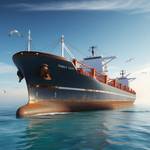
Tanker ships are an important component of the maritime sector, and they transport liquid cargoes around the world. These vessels are vital to the supply chain for energy, chemicals and other essential commodities. There are many types of tankers, each designed for specific cargoes such as oil, LNG, chemicals, or other liquids.
The maritime industry, a crucial pillar of global trade, has always grappled with the challenge of piracy. Over the past few decades, the nature of piracy has dramatically evolved, and new technologies have become a double-edged sword. On one hand, they offer improved safety and navigation capabilities; on the other, they provide pirates with unprecedented tools that enhance their capacity for disruption, theft, and violence. Let's delve into the growing threat of new technologies in maritime piracy and the implications for global maritime security.
A port authority operates ports and other transportation infrastructure for a special-purpose district. Whether operated directly by the government or in cooperation with government agencies, North American port authorities are public entities and are governed by a board or commission.
Pods are devices which combine both propulsive and steering functions in one device. They are usually located below the stern of a ship, making use of the following internal components: a fix pitch propeller, shaft, thrust and support bearings…



