Marine Link
Sunday, July 12, 2026

Rising Technological Threats in Global Shipping

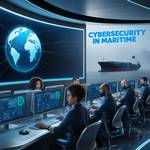
The maritime industry, a crucial pillar of global trade, has always grappled with the challenge of piracy. Over the past few decades, the nature of piracy has dramatically evolved, and new technologies have become a double-edged sword. On one hand, they offer improved safety and navigation capabilities; on the other, they provide pirates with unprecedented tools that enhance their capacity for disruption, theft, and violence. Let's delve into the growing threat of new technologies in maritime piracy and the implications for global maritime security.

1. Enhanced Navigation and Tracking Systems

a. GPS Spoofing and Jamming: Pirates have begun utilizing GPS spoofing and jamming devices to mislead or disable navigation systems on ships. This technology can redirect vessels off established routes, making them easier targets for boarding and hijacking.

b. Automatic Identification System (AIS) Exploitation: While AIS is designed to increase maritime safety by providing real-time vessel tracking information, pirates can misuse this data. They can identify target-rich environments, monitor ship movements, and plan attacks more effectively.

2. Cyber Attacks

a. Ransomware and Malware: The shipping industry is increasingly reliant on digitized systems for managing logistics and operations. Ransomware and other malware attacks can cripple a vessel's operational capabilities, making ships vulnerable until a ransom is paid.

b. Phishing and Social Engineering: Maritime personnel can fall victim to sophisticated phishing attacks that grant pirates access to critical shipboard systems. Information obtained through these means can be used for planning and executing physical sea attacks or conducting financial fraud.

3. Drones and Unmanned Vehicles

a. Surveillance Drones: Pirates can employ drones for reconnaissance missions to monitor ship routes, identify vulnerable targets, and even assess security measures on deck in real time.

b. Unmanned Underwater Vehicles (UUVs): These devices can be used for sabotage, such as planting explosives on the hull of a ship while remaining undetected.

4. Communication Interception

a. Radio and Satellite Interception: Pirates can intercept radio and satellite communications to gather intelligence on ship movements, cargo, and crew, giving them a tactical advantage during hijacking attempts.

b. Spoofed Communications: By faking communications (e.g., distress signals), pirates can lure nearby ships into traps or create confusion during coordination efforts between ships and coastal authorities.

5. Artificial Intelligence (AI) and Machine Learning

a. Predictive Analysis: Pirates equipped with AI tools can analyze shipping routes and schedules to predict the best times and locations for attacks. This enables more efficient planning and execution of piratic activities.

b. Deepfake Technologies: Deepfakes can be used to create fake communications that appear to be from legitimate sources, tricking ship personnel into taking actions that could compromise the vessel's security.

Implications and Solutions

The increasing sophistication of maritime piracy due to advanced technology poses several serious implications:

Economic Impact: Disruptions in global trade routes can lead to significant economic losses, increased insurance premiums, and higher costs for goods.

Human Safety: The threat to crew members' lives and well-being cannot be overstated. Enhanced firepower and modern tools make pirate confrontations more dangerous.

Environmental Risks: Sabotage or hijackings leading to environmental catastrophes, such as oil spills, can have long-lasting detrimental effects on marine ecosystems.

To mitigate these threats, the maritime industry must adopt a multi-faceted approach:

Investment in Cybersecurity: Stronger cyber defenses and regular updates to software and protocols are vital. Training crews to recognize and respond to cyber threats is equally important.

Advanced Surveillance and Defense Measures: Deploying counter-drone systems and underwater detection technologies can help identify and neutralize threats before they become critical.

International Cooperation: Robust international collaboration in intelligence sharing, maritime patrols, and legal frameworks can help in the rapid identification and response to piracy threats.

Regular Drills and Training: Ensuring that crews are well-versed in emergency protocols and can react swiftly and effectively during an attack can save lives and property.

Technological Innovations: Continued innovation in protective technologies such as non-lethal weapons, improved monitoring systems, and secure communication networks will be essential in staying ahead of technologically savvy pirates.

The fusion of modern technology with traditional piracy presents an evolving challenge. By understanding these new threats and responding proactively, the maritime industry can safeguard its vessels, crews, and the global supply chain.

Tags: Cyber Attacks maritime security Artificial Intelligence Maritime Piracy Global Trade

Image courtesy Cool Carriers

In the Heat of the Summer, Cool Carriers Receives Snow Flake

Cool Carriers has taken another step in its fleet renewal strategy with the delivery…

© ACUA Ocean

ACUA Ocean USV Collects 100 Hours of Continuous Multi-Domain Data

ACUA Ocean's Mk1 USV PIONEER has successfully completed a five-day remotely operated…

© Adobe Stock/vladsv

Two Vessels Struck Near Hormuz, LNG Tanker at Risk of Explosion

A Qatari LNG tanker was at risk of exploding and a Saudi-flagged crude oil tanker…

© Adobe Stock/moofushi

Ukraine Attacks a Dozen Russian Shadow Fleet Tankers Over Two Days

Ukrainian drones have attacked a dozen tankers from Russia's "shadow fleet" over…

© International Association of Dredging Companies

IADC Brings Dredging, Reclamation Seminar to Bali in November 2026

The International Association of Dredging Companies (IADC) has announced its Dredging…

(Credit: Fincantieri)

Fincantieri Strikes Four Deals in $687M Underwater Expansion

Italian shipbuilder Fincantieri has agreed to acquire majority stakes in four companies…

© Fleetwork

Fleetwork: Posidonia 2026 Signals Turning Point for Al, Cloud Adoption in Shipping

Artificial intelligence and cloud-native technologies have moved from innovation…

MOL Safety Operation Supporting Center - SOSC (Credit: MOL)

MOL, IBM Japan Launch AI Platform for Vessel Operations

Mitsui O.S.K. Lines (MOL) and IBM Japan have jointly developed an artificial intelligence…

Image courtesy Fincantieri

Albanian Shipbuilding Gets a Boost with Fincantieri MOU

Fincantieri has taken another step in establishing a long-term shipbuilding presence in Albania…

U.S. Coast Guard Capt. Anne O'Connell, commanding officer of the Legend-class national security cutter USCGC Stone (WMSL 758), directs Stone through a 26-ship formation of 13 partner and allied nations during Fleet Exercise (FLEETEX) 250 in the Atlantic Ocean, June 25, 2026. Stone was underway taking part in FLEETEX 250, a series of structured multilateral training events at-sea, aimed at building cohesiveness, validating tactical procedures, and strengthening the interoperability of participati

FLEETEX 250 NATO Exercises Proceed Off US Coast

The warning came booming over the airwaves, in a voice unmistakably from the American…

Copyright Maritime Art Blog/AdobeStock

Is Hormuz Half-Open or Half-Closed? Tanker Rates on the Mend

The world's oil tanker fleet is behaving as if the Strait of Hormuz is reopening…

(Credit: Veson Nautical)

Veson Nautical Launches AI-Powered Platform for Maritime Trade

Maritime software provider Veson Nautical has launched the Veson Platform, a unified…

Related Articles

Autonomous Ships: Charting the Course for the Future of Maritime Navigation

The maritime industry is on the brink of a revolutionary transformation with the advent of autonomous ships. These vessels, capable of operating without human intervention, represent a significant leap forward in technology, promising to reshape the future of global shipping. Autonomous ships, also known as unmanned vessels, are designed to navigate and perform various operational tasks using advanced sensors, artificial intelligence (AI), and communication systems. This innovation is set to enhance efficiency, safety, and sustainability in the maritime sector.

Sailing to Net-Zero: The Decarbonization Mandate and the Green Fuels Race in Shipping

The global maritime industry is under immense pressure to meet ambitious climate targets, spearheaded by the International Maritime Organization (IMO)'s strategy to reach net-zero emissions by or around 2050. This mandate has triggered the most significant technological and financial upheaval the sector has ever faced. This article explores the core challenge—the decarbonization dilemma—focusing on the complex regulatory landscape (CII, ETS) and the intense, multi-fuel race to find viable, scalable, and safe "green fuels." We analyze the leading contenders—ammonia, methanol, and hydrogen—highlighting their pros, cons, and the colossal infrastructure investment required to power the future of global shipping.

The Future of Shipping: Autonomous and Unmanned Marine Vehicles

The maritime industry is on the brink of a revolution, with autonomous and unmanned marine vehicles poised to redefine the future of shipping. These innovative vessels, powered by advanced technologies and cutting-edge propulsion systems, offer numerous advantages, including increased efficiency, reduced operational costs, and enhanced safety. In this article, we'll explore the current state of autonomous marine vehicles, their propulsion systems, and the potential impact they may have on the global shipping industry.

Maritime Piracy

The maritime piracy menace is an old one, but it continues to be a significant threat to the global trade and security of the seas. Piracy is a major challenge today, despite concerted efforts by international organizations to combat this illegal activity. New developments and persistent threats are shaping the current landscape.

Bulk Carriers Vessels - The Workhorses of Maritime Transpor

Bulk carriers are vessels that transport bulk cargo, such as coal, ore and cement. Bulk carriers play an important role in the global trade, facilitating the transportation of large quantities essential raw materials for different industries.