Höegh Autoliners, Nordic Circles Partner For Ship Decommissioning

An agreement between Höegh Autoliners and green industry pioneer Nordic Circles launches a national project that will change the handling of decommissioned ships. Using Norwegian technology, labor, and industry, old ships will be upcycled in Norway into certified building materials—without melting, without export, and with up to 97% lower emissions.
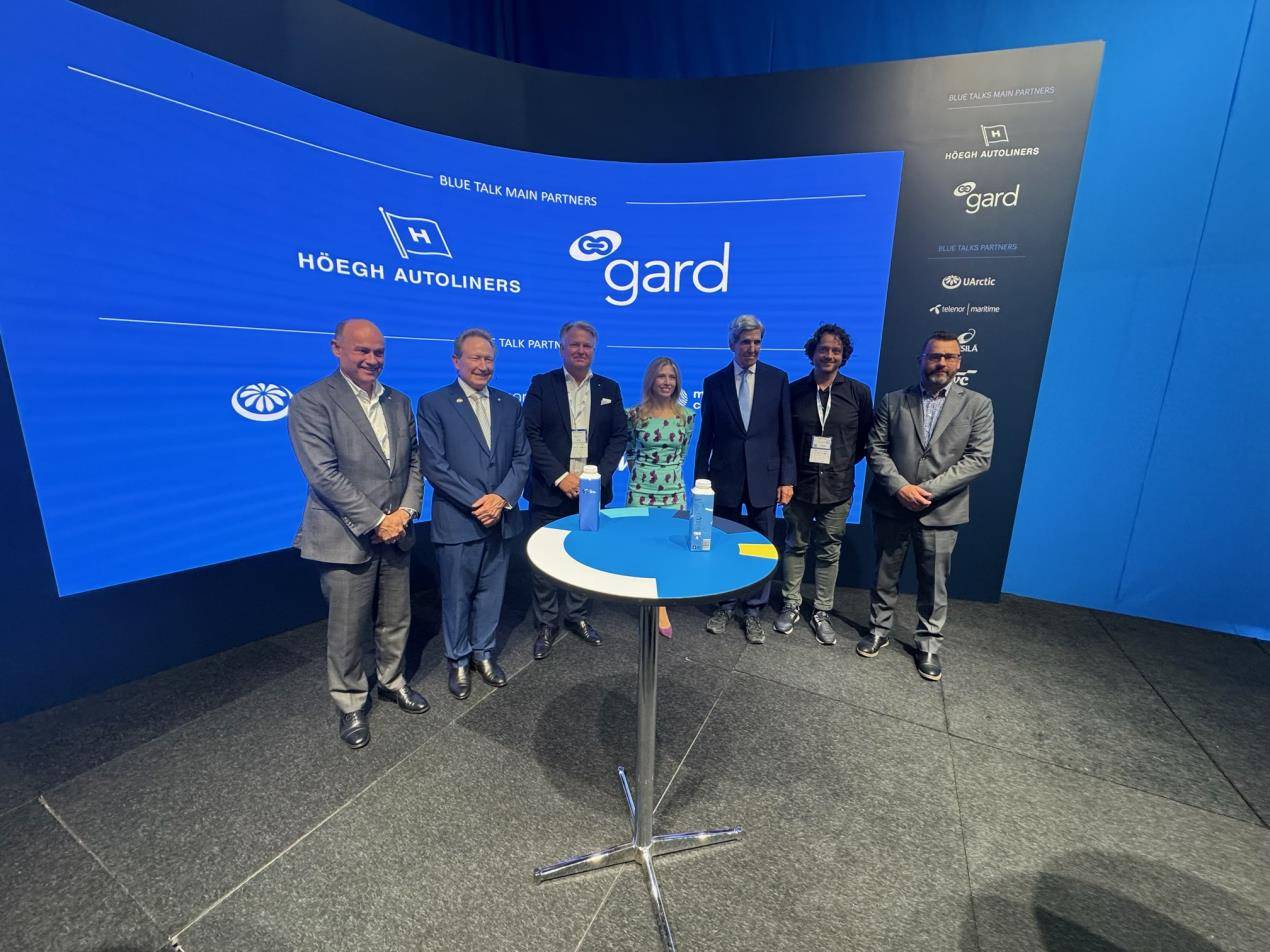
Nordic Circles and Höegh Autoliners are announcing the agreement on the Blue Talks stage at Nor-Shipping, in front of maritime leaders from around the world, including high-profile speakers such as John Kerry and Andrew Forrest of Fortescue, underscoring the global significance of the initiative.
The project establishes a circular value chain in which decommissioned ships are repurposed as environmentally friendly building materials in Norway.
The agreement covers up to eight ships from Höegh Autoliners, to complete the first upcycling in 2026. These eight ships alone could reduce carbon emissions in the construction industry by 100,000 tons of CO2.
The agreement is worth USD$128 million (NOK 1.3 billion). The first vessel is scheduled for decommissioning at AF Offshore Decom in Vats.
Globally, the construction industry accounts for 40% of greenhouse gas emissions, with steel being one of the largest contributors.
That’s why the core of the project is simple: Steel should not be exported and melted down—it should be reused in Norway and Europe. Norwegian shipyards and the steel industry are being developed into a competitive alternative to Turkey, which currently holds the EU’s only large-scale ship recycling capacity. The result is mass-produced steel with minimal emissions, under commercial terms.
The project is already supported by the full range of Norwegian public funding instruments through the Green Platform initiative. The founders of Nordic Circles are behind the initiative and lead the consortium.
AF Offshore Decom is the main contractor. Participants include leading companies from across the value chain, such as Statsbygg, the municipalities of Oslo and Bergen, Skanska, Green Yard, Equinor, DNB, and SINTEF.
Norway has the fifth largest merchant fleet by value, and when including the EU’s share, we see a market potential covering 45% of the world’s merchant fleet.
A doubling in decommissioning assignments is expected, driven by new climate regulations and an aging fleet.
Along the Norwegian coast, the maritime industry has developed seven EU-approved shipyards capable of decommissioning and upcycling. Among them, AF Offshore Decom at Vats is considered the world’s most environmentally friendly decommissioning facility.
All Norwegian yards have additional capacity, and several are equipped to handle large vessels.
This agreement is therefore the first step toward establishing Norwegian upcycling capacity —and a new green industry for Norway and Europe.