

Maritime Technologies Forum Publishes Guidelines for Methanol as Marine Fuel

The Maritime Technologies Forum (MTF) announced the publication of new guidelines to support companies in developing new Safety Management Systems (SMS) and strengthening existing SMS for ships using methanol as fuel. As the maritime industry accelerates its decarbonization efforts, low-carbon methanol has emerged as one of the most scalable alternative fuel options. Its liquid state under ambient conditions, compatibility with existing fuel infrastructure, and increasing industry adoption make methanol an attractive near-term solution.
ICS Publications Releases 6th Edition of Environmental Compliance Shipping Guide

International Chamber of Shipping (ICS) Publications launches the sixth edition of Shipping and the Environment: A Guide to Environmental Compliance, offering an expanded and accessible overview of how shipping relates to environmental protection and global regulation.Developed for a broad audience, including shipping companies, seafarers, policymakers, and those new to the maritime sector, the guide provides a clear introduction to environmental requirements affecting shipping today, alongside developments expected in the years ahead.
Lloyd’s Register Launches Newbuild Advisory Service, Updates Construction Guide

Lloyd’s Register (LR) is growing its role in the newbuilding market with the launch of its Newbuild Advisory Service and updated New Construction Guide.With global demand continuing to reshape shipyard orderbooks, owners are balancing a growing number of considerations during the planning phase of newbuilding projects, including fuel readiness, delivery timelines, technical capability and long-term operational requirements.Launching at Posidonia 2026, the Newbuild Advisory service is designed to support shipowners…
Korean Register, HD Hyundai Heavy Industries, Samsung Heavy Industries Publish EEDI Guidelines

Korean Register (KR) has published the "Numerical Calculation Guidelines for the Determination of the Attained EEDI," developed through a joint research initiative with HD Hyundai Heavy Industries (HD HHI) and Samsung Heavy Industries (SHI).The guidelines establish a standardized methodology for numerical analysis based on Computational Fluid Dynamics (CFD), providing an alternative to the conventional physical model testing previously used to verify vessel energy efficiency.As the International Maritime Organization (IMO) continues to tighten greenhouse gas reduction regulations…
MTF Issues Safety Guidelines for Wind-Assisted Ships

The Maritime Technologies Forum (MTF) has published new guidelines to support the safe operation of ships using wind-assisted propulsion systems, as the shipping industry increasingly adopts technologies aimed at reducing fuel use and emissions.The guidelines provide recommendations for developing and implementing safety management systems tailored to vessels equipped with wind-assisted propulsion systems (WAPS), including rotor sails, suction sails and wing sails.The report highlights the need to address operational…
ABS Consulting Paper Supports USGC Maritime Cyber Compliance

ABSG Consulting Inc. (ABS Consulting), a leader in safety, risk and asset integrity management, has released a paper to support vessel and facility owners and operators in meeting compliance with the U.S. Coast Guard’s (USCG) Maritime Cyber Rule. This paper outlines practical steps to meet the first cybersecurity training deadline of January 12, 2026.Titled From Final Rule to Fully Trained: Practical Direction for Meeting the U.S. Coast Guard’s Maritime Cybersecurity Requirements…
New Guidelines Developed for Safe Use of Ammonia Cargo as Fuel

Lloyd’s Register (LR), EXMAR and the Belgian Federal Public Service (FPS) for Mobility and Transport have helped to develop interim guidelines to enable the safe use of ammonia cargo as fuel on gas carriers.The Belgium FPS Mobility and Transport, with support from LR and EXMAR, led work to secure an amendment to the Code for the Construction and Equipment of Ships Carrying Liquefied Gases in Bulk (IGC Code) more than two years ago, removing restrictions previously preventing the consumption of ammonia cargo as fuel.
DNV, WMMF Publish Guide to Support Shipowners' Path to Net-Zero
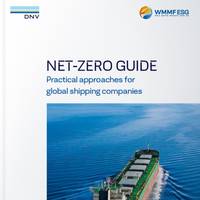
The maritime industry is experiencing a period of significant transformation, driven by evolving regulations, increasing commercial pressure, and a global shift towards reducing greenhouse gas (GHG) emissions. In response, DNV and the World Maritime Merchants Forum (WMMF) ESG team have published a new guide to help shipowners navigate these evolving challenges, an effort supported by industry organizations in Hong Kong and worldwide.The "Net-Zero Guide: Practical Approaches for Global Shipping Companies" provides a structured roadmap for advancing decarbonization.
MTF Issues New Guidelines for Qualitative Risk Assessments for Alternative-Fueled Ships

The Maritime Technologies Forum (MTF) announced the publication of guidelines for conducting qualitative risk assessments for alternative fueled ships: HAZID and HAZOP.The use of alternative fuels will be key to addressing the "2023 IMO Strategy on Reduction of GHG Emissions from Ships." While the IMO has developed guidelines for design and operation of ships capable of using them, the Alternative Design and Approval process is required for most alternative fuels until mandatory regulations are in place.
ClassNK Releases Guidelines for Onboard CO2 Capture and Storage Using Membrane Separation
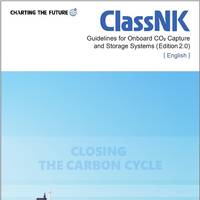
ClassNK has released "Guidelines for Onboard CO2 Capture and Storage Systems (Edition 2.0)", which assesses onboard CO2 capture systems (OCCS) using membrane separation. The guidelines can be used to support the safe development, manufacturing, and installation of a relevant system.CO2 capture from ship exhaust gas is growing in popularity as a way to reduce GHG emissions, and the development of onboard systems for capturing and storing CO2 is being undertaken. In 2023, ClassNK published the first edition of the "Guidelines for Onboard CO2 Capture and Storage Systems…
Second Edition of Ship to Ship Transfer Guide Published
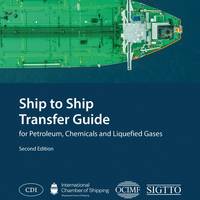
The Chemical Distribution Institute (CDI), International Chamber of Shipping (ICS), Oil Companies International Marine Forum (OCIMF) and the Society of International Gas Tanker and Terminal Operators (SIGTTO) have released the second edition of ‘Ship to Ship Transfer Guide for Petroleum, Chemicals and Liquefied Gases’.Originally published by OCIMF in 1975, the STS Transfer Guide was consolidated in 2013 through the combined expertise of CDI, ICS, OCIMF and SIGTTO. Recognized globally by the tanker industry and IMO Member States as the definitive reference for safe and effective STS operations…
Navigating Nuclear Energy in Maritime with Lloyd’s Register at Helm
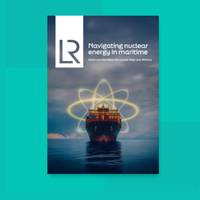
Lloyd’s Register (LR) has published a new guidance document, providing the first roadmap for the safe and responsible use of nuclear technology in commercial shipping and offshore industries.As the maritime sector accelerates its transition towards sustainable energy solutions, nuclear power has re-emerged as a viable solution to achieve net-zero ambitions. The guidance, Navigating Nuclear Energy in Maritime, was developed in partnership with Global Nuclear Security Partners (GNSP) and marine insurer NorthStandard.It sets out the practical steps project teams must take…



