

Op-Ed: The Scripps Award Sets a Precedent Small U.S. Shipyards Cannot Survive

Scripps Institution of Oceanography is building its next coastal research vessel in Chile. If that award stands as the model for how publicly funded institutions replace their fleets, the small American shipyards that build this country’s research vessels lose a market they cannot survive without.MarineLink.com reported the award in August: a 124-foot vessel for Scripps, part of the University of California San Diego, going to ASENAV in Valdivia, Chile. Qualified U.S. yards competed for it and came in under the project’s publicly stated budget. The work is leaving the country anyway.
Op/Ed: Who Will Design America's Next Fleet?

The United States is having a maritime moment. Maritime is back on the national agenda. The Maritime Action Plan, the SHIPS for America Act,and now the Administration’s August 13 memorandum on rebuilding the Navy and America’s shipbuilding industrial base have renewed the conversation about rebuilding America's maritime capability. The focus on shipyards, workforce development, the merchant marine, and domestic vessel construction is both encouraging and long overdue.After more than two decades designing commercial vessels, I’m encouraged by the attention.
KUSPC: Commercial Shipbuilding’s New Partnership or an Outlet to Support Defense Acquisitions?

On July 23rd, 2026 Amtech, courtesy an invitation from the U.S. Department of Commerce, attended the Grand Opening of the Korea-U.S. Shipbuilding Partnership Center (KUSPC) in Washington DC, a Secretary level event with invitations provided to recognized leaders in the U.S. commercial and naval shipbuilding industry. Amtech has been working with Commerce from the initial release of the first Executive Order issued to recover and develop U.S. maritime dominance. And with that,…
Can an Arctic Shipbuilding Alliance Break the Ice on Long-Term Strategic Collaboration?
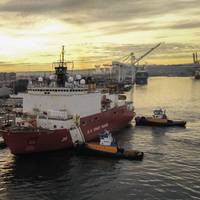
Without a way for industry to work together, the US, Canada, and Finland will not achieve the aims of the ICE pact, writes Denis Morais, CEO SSI.The United States and Canada have made no secret of their desire to add to their ice-breaking capacity, with ambitious plans to build the new tonnage in their home countries.The US has indicated it could need as many as 40 new icebreaking vessels, in addition to ice-class tonnage that could be required to support operations in the high north.
OPINION: Seeing the Ship as a System Changes Everything

Shipping must engage with the decarbonization realities that lie ahead by changing the way it crafts maritime legislation to reflect its place in the interconnected, interdependent world economy, says Eero Lehtovaara, ABB Marine & Ports.ABB Marine & Ports Head of Regulatory & Public Affairs, Eero Lehtovaara has carved out an unusual - and possibly unique - role in the maritime industry over recent years, as a ‘stakeholder’ simultaneously mindful of the perspectives of owners, seafarers…
OPINION: A New Approach to Maritime Safety is Needed

For years, the shipping industry has focused on regulations and procedures to improve safety. Yet shipping is still at risk of major accidents. The whole industry needs to change its focus. Ticking boxes never made anyone safer. Also, assessing culture using valid and reliable survey instruments can help to improve safety.It has been well documented that most maritime accidents (~80%) are caused by human error. Still, most of the focus on learning is rooted in technical causes and adding procedures and checklists.Despite this bias…
Opinion: A Call for the USNS Walter Munk to Honor America’s Greatest Oceanographer

In the 2021 National Defense Authorization Act, Congress established a commission to rename several military bases and ships that commemorate members of the Confederacy. One of these is the Naval oceanographic ship USNS Maury (T-AGS 66), named after oceanographer Matthew Fontaine Maury, who resigned his commission in the U.S. Navy to join the Confederacy at the outbreak of the American Civil War. The USNS Maury is an asset of the Naval Meteorology and Oceanography Command (NMOC), which I led from 2014-2017.
Opinion: COVID-19, Climate Change ... & Changing the World, Together

Our planet is facing its greatest challenge, and it’s not coronavirus. Asbjørn Halsebakke, Product Manager, Yaskawa Environmental Energy / The Switch, ponders how greater political action could help the maritime industry meet its most ambitious environmental goals.Why hasn’t the climate crisis elicited the same urgent response from global governments as the corona pandemic? When confronted with the terrible threat of viral spread, national leaders from Boris Johnson to Narendra Modi…
Opinion: Getting Ahead of the Reality

In a few short months, the mayhem wrought by coronavirus has changed the world. Our response to the epidemic [more than the virus itself] has the potential to permanently alter the balance of the global economy. But it might be the kind of Black Swan event that we need to trigger real change in the shipping industry – and in particular its approach to digitalization of vessel operation.Like the worldview bubbles created by social media algorithms and fake news, the maritime industry is living in its own digitalization fantasyland - one fueled by vendor delusion and media misinformation.
Opinion: Maritime Freedom & the Global Commons
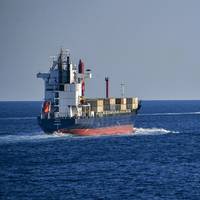
“Freedom” – the absence of subjection to foreign domination or despotic governmentIt has been decades since international relations in the world order dictated true competition for sea control, sea lines of communication, access to world markets, and diplomatic partnerships. However, it is becoming increasingly alarming that nations such as Iran, China and Russia seek to accumulate/consolidate power and re-define international maritime norms, potentially at the peril of diplomatic…



