

Schneider Electric, Microsoft Collaborate on Autonomous Production

Schneider Electric, a global energy technology leader, is deepening its collaboration with Microsoft to help make it easier for industrial companies to modernize their operations, break free from proprietary legacy systems and deploy AI-powered automation at scale.
A Collaboration Built to End Legacy Drag
The Schneider Electric collaboration with Microsoft combines Schneider Electric’s role as a global energy technology partner and pioneer of open, software‑defined automation with Microsoft Azure cloud, AI, and edge infrastructure. The goal is a practical, vendor-neutral path for industrial companies to modernize without scrapping existing investments or halting production.
Central to this is the Industrial Copilot, which extends intelligence to the edge using Microsoft Azure’s cloud and AI services approach for local inference and reinforcement. It automates the engineering tasks that slow modernization most: writing control logic, configuring systems, and navigating documentation. Engineering teams using it report up to 50% time savings, with production line changes that once took weeks now completed in hours.
Underlying everything is Schneider Electric’s EcoStruxure Automation Expert, the world’s first open, software-defined automation platform. By separating software from hardware, it lets customers run and reuse their automation applications across different equipment, vendors, and generations of infrastructure. Microsoft Azure provides the secure cloud and edge backbone that connects it all, from individual sensors to enterprise dashboards.
Together, the two companies are offering something the industrial world has lacked: a migration path that meets organizations where they are, not where they “should be.”
Green Hydrogen with h2e POWER
Green hydrogen is central to global decarbonization plans; however, producing it cheaply and reliably at scale remains a challenge. Solid oxide electrolyzers (SOECs) offer the highest efficiency of any hydrogen production technology, but their operating conditions are so demanding that it has been difficult to maintain equitable net energy consumption and operate them autonomously.
h2e POWER, an India-originated green tech company based in Pune with operations in India, Germany and the USA, had exactly this challenge. Its SOEC system is technically superior, but limited real-time visibility and the absence of open, scalable automation were pushing operating costs well above design targets.
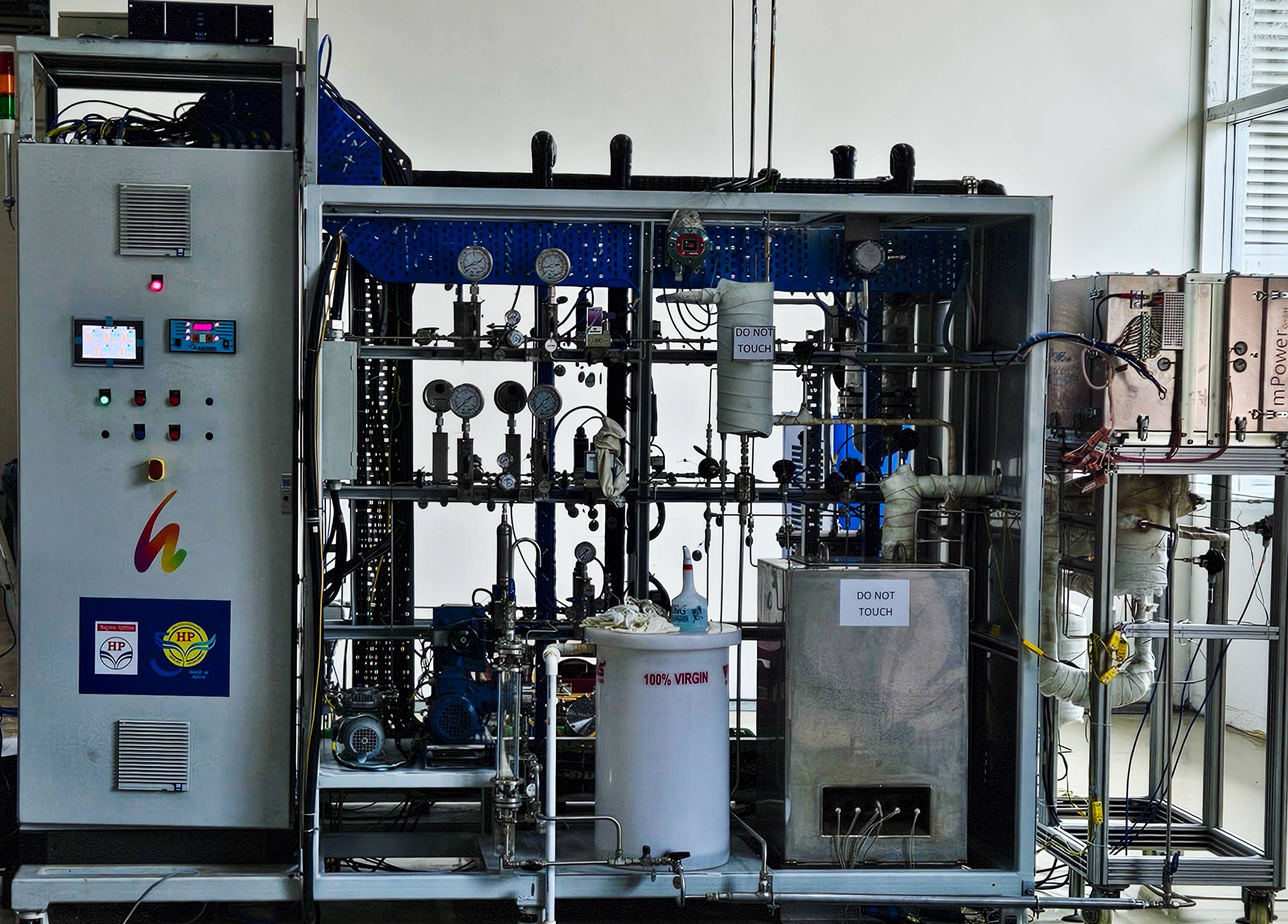
Working with Schneider Electric, they deployed a new AI-powered control solution on h2e POWER’s 20 kW SOEC system. The solution continuously monitors and adjusts the electrolyzer in real time, managing thermal balance, hydrogen flow, energy inputs, and safety and equipment health, remotely.
The results show that energy efficiency improved, stack wear was significantly reduced, and the levelized cost of hydrogen, the industry’s key economic metric, fell by up to 10%, equivalent to around USD$582,000 (€500,000) per year for a typical 10 MW plant. The system has now run for more than 6,000 hours, making it one of the most durable autonomous electrolyzer demonstrations in India, and probably anywhere in the world.


