

Singapore Developing Master Maritime Plan

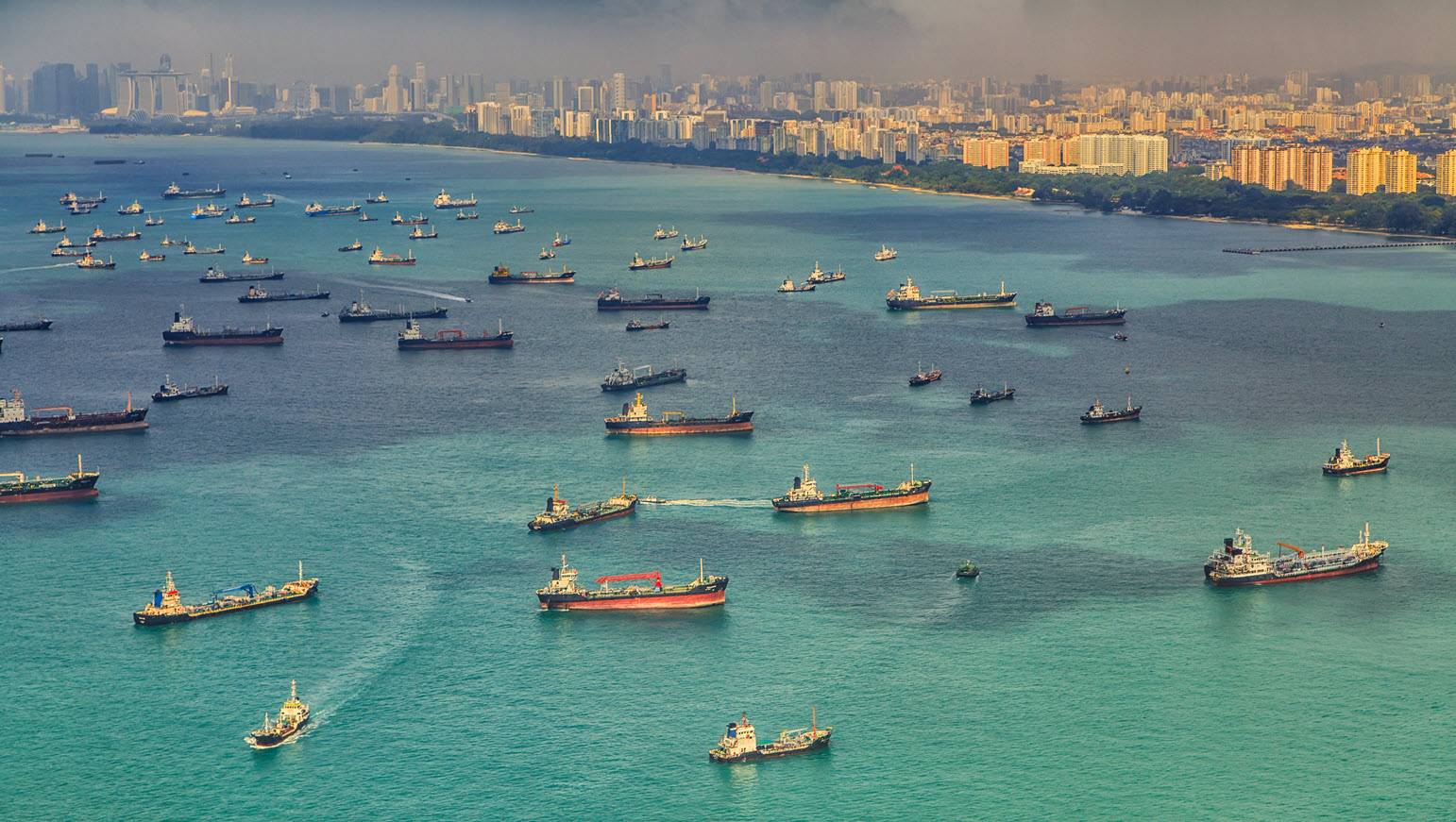
Amidst a more complex and uncertain operating environment, Singapore’s MPA is charting the long-term direction for Maritime Singapore. This includes developing strategies to seize growth opportunities and strengthen Singapore’s position as a key node in global trade, while continuing to drive innovation, accelerate technology adoption, and develop a future-ready workforce.
MPA is developing the Maritime Singapore Master Plan, an industry-wide blueprint to guide the sector’s longer-term development. Targeted for release in 2027, the Master Plan will outline strategies and plans to strengthen Singapore's competitiveness as a global hub port, enhance Singapore’s attractiveness as an international maritime center, grow Singapore as a center for maritime technology, innovation, including in AI and R&D, and develop a skilled maritime workforce.
In the coming months, MPA and the Ministry of Transport will engage businesses, industry stakeholders, and the public to gather feedback and ideas and co-create a common vision. A local industry panel comprising key business leaders will also be convened to provide their expertise on opportunities and challenges for the industry.
The Master Plan will chart out the long-term business planning, investment, and skills development across the maritime ecosystem. It builds on the sector’s steady growth and transformation, which has anchored more than 200 international shipping groups over the last five years.
Recognizing that talent development is crucial for maintaining Singapore’s status as a leading maritime hub, MPA will introduce the Maritime Cluster Fund – Global Rotation (MCF-GR). This new initiative will co-fund the overseas deployment of local middle managers when they take on regional or global supervisory roles. These assignments provide local maritime professionals greater exposure to international operations while building leadership capabilities in multi-cultural environments.
To further support structured career development in the maritime sector, MPA will also streamline the requirements of the Maritime Cluster Fund – Management Associate (MCF-MA) scheme to make it easier for firms to come onboard the scheme and co-fund career development programs. Through the enhanced scheme, young professionals can undergo structured rotations across different commercial and operational roles to build a broader understanding of the maritime value chain and enable their career progression.
To reinforce Singapore’s position as a global center for maritime innovation, MPA will introduce a new innovation track under the Maritime Cluster Fund – Business Development (MCF-BD) scheme. The new track aims to attract maritime companies to anchor their innovation and technology leaders, product teams, and corporate venture capital (CVC) functions in Singapore.
The scheme enhances support for companies setting up innovation and technology desks or CVCs in Singapore, co-funding qualifying costs such as rentals and salaries of key personnel. Companies will also gain access to R&D expertise and resources, regulatory sandboxes, and co-funding support to pursue innovation activities. This encourages companies to not only set up offices in Singapore but also entrench their innovation capabilities in Singapore’s maritime ecosystem.
From the second half of 2026, MPA will be expanding trials of unmanned surface vessels (USV) for use in Singapore’s port waters. These trials are designed to enhance safety, efficiency, and resilience, focusing on two key applications:
a. Surveillance and Early Detection for Enhanced Response. USVs equipped with advanced AI-enabled sensors can augment routine patrols, anomaly detection, and hazard monitoring to improve navigational safety and incident management. These USVs will complement existing patrol craft and shore-based sensors in high vessel-traffic areas.
b. Transforming Hydrographic Operations. USVs enable safer and more efficient hydrographic surveys, particularly in areas that are difficult for conventional survey vessels to access. This will help MPA maintain up-to-date hydrographic data of Singapore’s port waters with lower manpower requirements.
Findings from the trials will support the safe and scalable integration of USVs in port operations. MPA will work with industry partners to develop safety standards, technical specifications, and operating procedures for USV deployment.
MPA is releasing new tools for the industry to tap into the maritime digital twin (MDT) to test products and services before implementation and enhance coordination capabilities across agencies using the MDT. Beginning with two pilot use cases, these efforts will enable better delivery of marine services to port users.
a. Today, ship supply services for vessels calling at Singapore are coordinated manually between suppliers and ship agents, often resulting in delays and inefficiencies. The first pilot on Supply Services and Job Coordination allows industry to leverage the MDT to strengthen coordination on fleet utilization and job planning, thereby reducing vessel idle time and improving service reliability. It will be conducted from Q1 2026, involving real-time visualization and the sharing of operational data among selected marine services providers, port service operators, and supply chain partners.
b. The second pilot on Incident Coordination will integrate data from multiple sources to improve decision-making for incident response. Drawing on vessel traffic data, weather information, drone feeds, and oil and chemical plume models, it aims to enhance situational awareness and facilitates multi-agency coordination. The pilot will start from Q2 2026, involving incident response operators, port service providers, and relevant public agencies.
MPA will also develop a common developer toolkit and make available MDT-compatible digital tools, software libraries, and application programming interfaces (APIs). This will enable companies and researchers to plug into MPA’s data stream and test new operational concepts and simulation models before building full-scale applications.
Singapore's Just-In-Time (JIT) Planning and Coordination Platform optimizes the use of port resources, facilitating faster ship turnaround time in the Port of Singapore, and delivers immediate operational benefits. Since its launch in 2024, over 150 port users and service providers across the container, general cargo, and bulk sectors have come onboard the platform, improving vessel turnaround time in our port. Trials for tankers are set to commence by the end of March 2026.
MPA has also worked with IMDA and M1 to complete the roll-out of Maritime 5G coverage in Singapore’s major fairways, anchorages, terminals, and boarding grounds in 2025. This supports the transformation of our maritime operations by delivering more efficient, and more resilient maritime activities. The network provides high-bandwidth, low-latency connectivity to support real-time applications such as digital bunkering, autonomous vessel and drone trials, and remote inspections. MPA will be working with IMDA and M1 to optimize the network coverage and develop new use cases.


