

The Switch Extends DC Protection with Capability for Direct Battery Connection

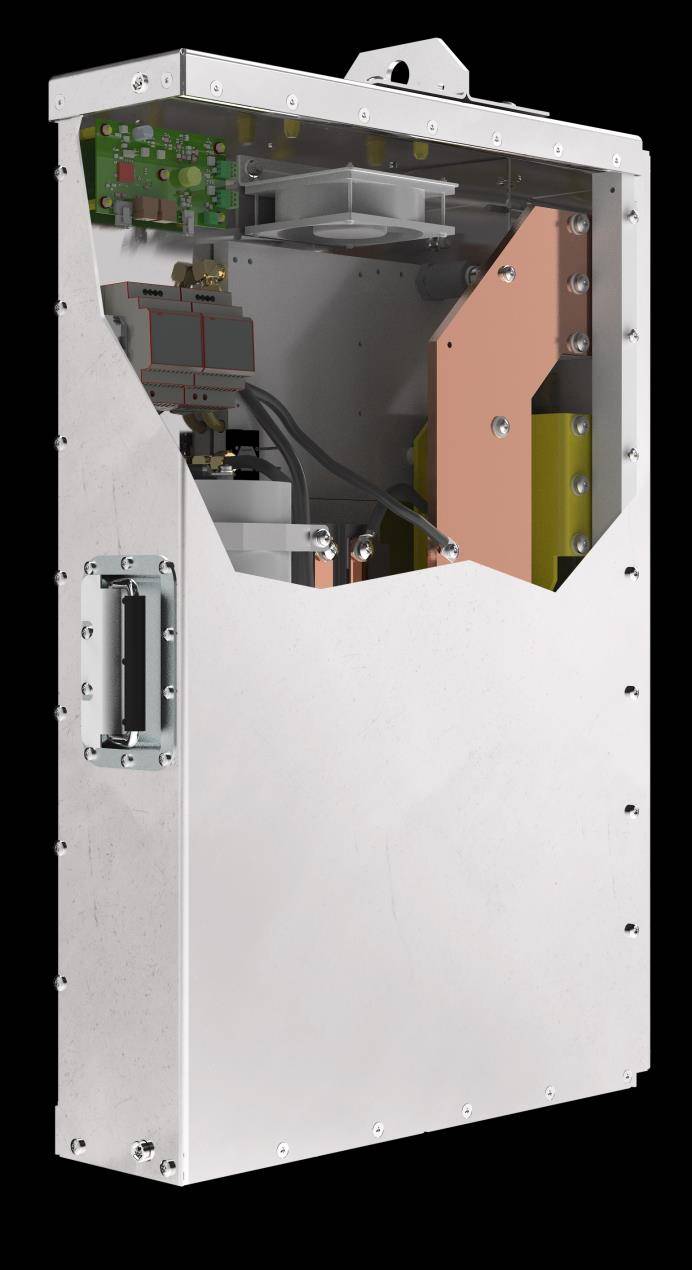
Finnish marine power electronics specialist’s new Electronic Current Limiter (ECL) enables batteries to connect directly to DC systems while preserving ride-through and system stability.
The Switch has expanded its portfolio of DC protection technologies with the ECL to address a growing challenge in modern hybrid and electric vessels: how faults in large battery systems can affect the rest of the ship. As batteries play a larger role in vessel propulsion, power generation and energy storage, a fault on the battery side is no longer a local issue. Without sufficiently fast protection, sudden fault currents can pull voltage down across the shared DC system, causing healthy equipment to trip or shut down and turning a contained technical issue into a wider operational disruption.
Installed between batteries and the DC-Hub, the ECL limits fault current during abnormal conditions before it can propagate into the DC system. By acting at microsecond speed, it preserves DC-link voltage and ride-through capability, allowing other consumers to continue operating.
Completing the protection architecture
The ECL builds on The Switch’s established suite of semiconductor-based protection devices for DC distribution. Electronic DC Breakers (EDCBs), integrated inside inverter modules, isolate internal faults within microseconds, ensuring failures are contained locally without destabilizing the DC-Hub. Electronic Bus Links (EBLs) provide selective protection between DC-Hubs, allowing energy sharing during normal operation while instantly separating sections if a serious fault occurs.
Battery Short-Circuit Limiters (BSCLs) address the growing short-circuit energy associated with large battery installations by preventing that stored energy from being released into the DC system during a fault.
The ECL complements these technologies by focusing specifically on faults on the battery side, particularly in configurations where batteries are connected directly to the DC link.
Enabling simpler, more robust system designs
By allowing batteries to connect directly to the DC link, the ECL enables simpler system architecture with fewer conversion stages. In most cases, this increases vessel efficiency and reduces footprint, all while ensuring predictable behavior during faults thanks to its fast, selective protection.
For shipowners, the benefit is not only efficiency but operational resilience. When faults are contained quickly, vessels can continue operating or exit operations safely, rather than experiencing blackouts or cascading system failures.
Like The Switch’s other protection technologies, the ECL is based on semiconductor devices and fast current measurement, operating at microsecond timescales rather than milliseconds. Its introduction reflects a broader shift in marine power system design, where failure behavior and ride-through capability are treated as core design criteria rather than afterthoughts.


