Pod Propulsion
Pods are devices which combine both propulsive and steering functions in one device. They are usually located below the stern of a ship, making use of the following internal components: a fix pitch propeller, shaft, thrust and support bearings, brake, and shaft seals; exciter; AC motor (synchronous); bilge pump; and appropriate monitoring and control equipment. The steering unit uses slewing gears and is located in the hull above the pod itself. Lubrication equipment and ventilation/cooling units are usually located externally, as sub systems. Propulsion pods are not a new product, but a new configuration of traditional marine systems and components.
As yet, studies have not shown whether pods are more efficient than conventional shaft lines. There has been much research on the subject, but most studies have been aimed at a specific aspect of pod performance instead of an overall efficiency review. Several advantages have been attributed to pod propulsion systems, such as: reduced emissions, lower noise and vibration levels and emissions; improved steering maneuvering, and braking capabilities. The reduced number of component parts also allows for more flexibility in arranging system machinery, more efficient construction and improved shipyard logistics. On the opposite end of the argument, pods require a greater capital investment, have a 30MW power limitation (per screw), and have been known to suffer losses in power due to electric propulsion.

ZF Marine Debuts 4600 POD Propulsion System
Marine driveline specialist ZF announced it will premier its new 4600 POD Propulsion…

Superyacht ARTEFACT: A real “arte factum”
NOBISKRUG’s Project 790 is one of the first yachts built under the new strict IMO…

Shipbuilding: Inland Towing Thunderstruck
Eastern Shipbuilding offers the 4,200 hp Thunderbolt inland towboat designed around…

Thunderbolt: Eastern Delivers Innovative Towboat
Eastern Shipbuilding Group, Inc. introduced its new 120-ft., 4,200-hp Inland Towboat design…
Eastern Debuts ‘Thunderbolt’ Towboat
Eastern Shipbuilding Group, Inc. introduced its new 120-foot, 4,200-horsepower Inland…

Azipods Earn US$180-Million for ABB in 2013
Pod propulsion system Azipod® was the propulsion system of choice for 6 new cruise liners in 2013…

Caterpillar Set to Showcase New Pod Propulsion Engine
Caterpillar Marine say they will unveil a significant product milestone at the 2013…

ZF Marine’s New Single POD Propulsion System
ZF Marine LLC, the North American division of the global ZF Marine Group, introduced…

Air Supported Monohull with Pod Propulsion
Effect Ships International AS, Sandefjord, Norway has just launched their first Air…
Royal Caribbean, Rolls-Royce Pod Settlement
Royal Caribbean Cruises Ltd. (NYSE, OSE: RCL) and Rolls-Royce announced that they…
STX Europe, New Order from French Navy
STX Europe has, through its subsidiary STX France Cruise SA, signed a contract to…
Siemens Equips Ships for Australia's Navy
Siemens Marine Solutions has been commissioned by the Spanish shipyard Navantia S.A.
Drug smuggling has long been a lucrative enterprise for criminal organizations worldwide. With the increasing sophistication of law enforcement agencies and border controls, smugglers are continuously adapting their methods. One of the most challenging trends to combat is the use of ships and submarines to transport illicit drugs across international waters. This article explores the methods, routes, and challenges associated with maritime drug smuggling.

Naval forces globally are undergoing a profound transformation, driven by an accelerating pace of technological innovation and evolving geopolitical landscapes. This article explores the cutting-edge advancements that are redefining maritime defense and offense. From the integration of artificial intelligence and unmanned systems to the development of directed energy weapons and advanced stealth capabilities, we delve into how these innovations are enhancing situational awareness, extending operational reach, and enabling new forms of naval warfare. The future fleet will be characterized by networked, intelligent, and highly adaptable platforms, operating across multiple domains to secure sea lanes and project power more effectively than ever before.

Cutting-Edge Electric Propulsion for Container ShipsHD Korea Shipbuilding & Offshore Engineering and HD Hyundai Heavy Industries received Approval in Principle (AIP) from ABS for a concept design of a 16,000 TEU container ship featuring an electric propulsion system.
3D printing, also known as additive manufacturing, is rapidly gaining traction in the shipbuilding industry. This innovative technology allows for the creation of complex components and structures by adding material layer by layer, rather than subtracting it from a larger block. As the maritime sector seeks to enhance efficiency, reduce costs, and improve sustainability, 3D printing is emerging as a powerful tool that has the potential to revolutionize shipbuilding and repair processes.
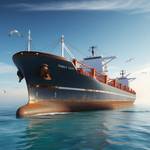
Tanker ships are an important component of the maritime sector, and they transport liquid cargoes around the world. These vessels are vital to the supply chain for energy, chemicals and other essential commodities. There are many types of tankers, each designed for specific cargoes such as oil, LNG, chemicals, or other liquids.




