Ship Simulators
A ship simulator is an advanced training device; an electronic or mechanical system used to expose vessel operators and crew members to typical shipboard conditions and systems. Simulation training is not a substitute for the experience of training on an actual vessel, but is used as a preliminary method to thoroughly familiarize students with equipment, procedures, and processes. Simulation also is useful for review and for demonstrating updates and modifications to existing craft.

Liberia Opens Maritime Training Institute
The Liberia Maritime Training Institute (LMTI) was officially opened by Liberia President…

Wallem Adds Three Ship Simulators in Ukraine
The Wallem Maritime Training Center in Odessa, Ukraine added three training simulators…

PC Maritime to Install ECDIS in 50-vessel China Shipping Deal
PC Maritime’s Navmaster ECDIS has been chosen by China Shipping Group to be fitted…
MSI to Train NOAA Officers
Maritime Simulation Institute to Provide Professional Maritime Training to NOAA Officers…
HR Wallingford Sign Navigation Simulator Agreement with FMSC
HR Wallingford has recently signed an alliance agreement with Fremantle Maritime…
Cal Maritime Will Host 2012 Koch Sea Scout Cup
The California Maritime Academy (Cal Maritime), a campus of The California State University…
Panama Canal Authority Opens Simulator Center
In commemoration of the Panama Canal’s 88th Anniversary on August 15th, Panama President…
Marine salvage is the process of rescuing a ship, its cargo, or other property from peril. Salvage encompasses rescue towing, putting out fires, patching or repairing a ship, refloating a sunken or grounded vessel, moving a disabled vessel in order to clear navigation channels…
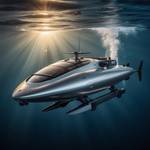
The maritime industry is on the brink of a revolution, with autonomous and unmanned marine vehicles poised to redefine the future of shipping. These innovative vessels, powered by advanced technologies and cutting-edge propulsion systems, offer numerous advantages, including increased efficiency, reduced operational costs, and enhanced safety. In this article, we'll explore the current state of autonomous marine vehicles, their propulsion systems, and the potential impact they may have on the global shipping industry.
The maritime industry, a crucial pillar of global trade, has always grappled with the challenge of piracy. Over the past few decades, the nature of piracy has dramatically evolved, and new technologies have become a double-edged sword. On one hand, they offer improved safety and navigation capabilities; on the other, they provide pirates with unprecedented tools that enhance their capacity for disruption, theft, and violence. Let's delve into the growing threat of new technologies in maritime piracy and the implications for global maritime security.

Container ships are vessels designed specifically to transport standardized containers. Container ships have revolutionized shipping, making it more cost-effective and efficient to transport goods across oceans.
All ships need maintenance and repairs. Many repair and maintanance operations can be performed at sea or by the crew in port. Complicated or large-scale repairs might require the ship to be removed from commercial operation. Classification…




